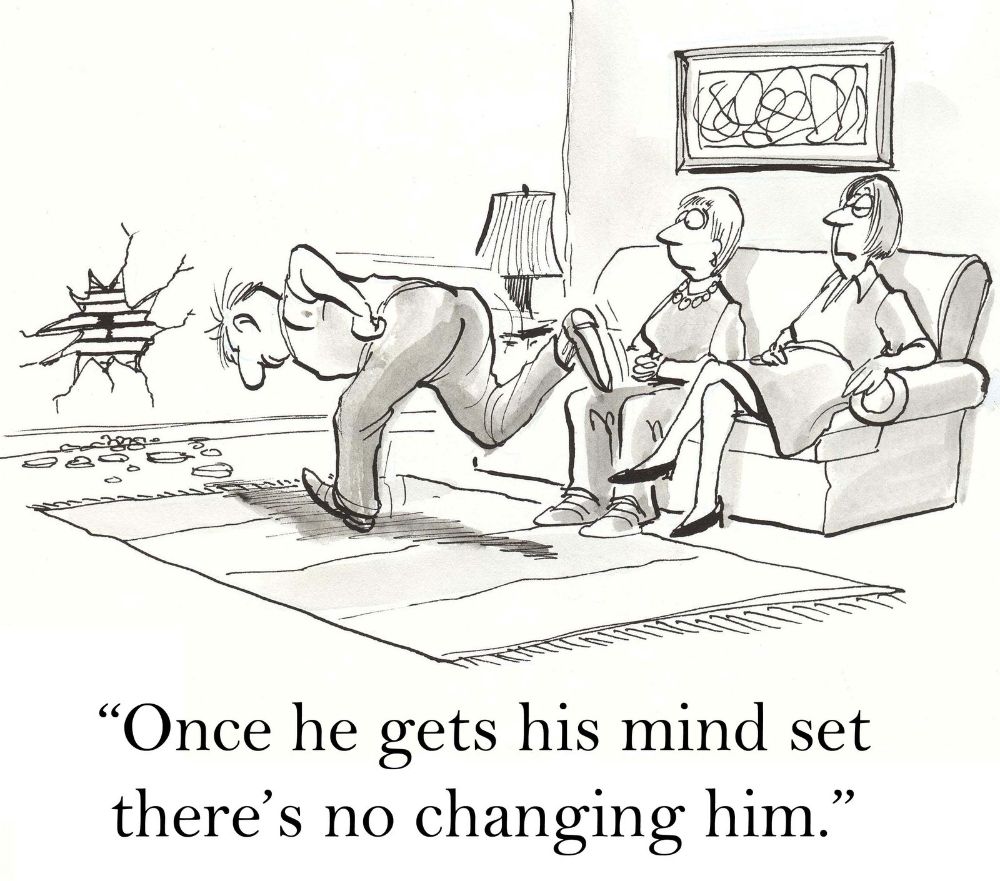
Educational Puppy Mills: How We Built a Degree Machine That Produces Unqualified Graduates
If you buy a dog from a puppy mill, you get a clean receipt, a birth certificate, and a charming pedigree on paper. But as soon as you bring the puppy home, the reality sets in: severe health defects, behavioral issues, and a total lack of social foundation. The paper was real, but the product was broken.
American education is increasingly operating under the exact same business model.
From suburban high schools passing functionally illiterate seniors to prestigious university departments granting PhDs to candidates who cannot write a coherent research paper or pass an entry-level technical interview, we have created an educational puppy mill pipeline. We have decoupled credentials from competence. We are churning out record numbers of graduates decorated with diplomas, bachelor’s degrees, and doctorates who are utterly unqualified for even entry-level work in their fields.
How did a system designed to build human capital transform into a credential factory that systematically degrades it?
Part 1: The High School Assembly Line – Diplomas Without Literacy
The pipeline starts long before higher education. It begins in K-12 public education, where the core metric of success is no longer mastery—it is the graduation rate.
Over the last two decades, school districts across the country have faced relentless administrative and political pressure to increase graduation rates. On paper, it looks like a triumph: national high school graduation rates have climbed toward historic highs. In practice, this metric was game-tested and broken through three mechanism:
- No-Zero Policies: Grading systems that establish a minimum score of 50% for missing work, ensuring that a student who does zero effort remains mathematically capable of passing with minimal effort at the end of the term.
- Infinite Credit Recovery: Algorithmic online modules where students can "recover" a semester of failed English or Algebra in a single afternoon by repeatedly clicking through multiple-choice quizzes until they pass.
- Automated Social Promotion: Administrative mandates that subtly—or explicitly—discourage teachers from failing students, as retention rates hurt district funding and property values.
The result is a tragedy hiding in plain sight: functional illiteracy.
Employers hiring high school graduates for entry-level logistics, retail management, or trade apprenticeships report teenagers who cannot read basic safety manuals, draft a three-sentence email to a client, or perform middle-school arithmetic without a smartphone interface. The diploma, once a signal that a young adult possessed basic foundational literacy and discipline, now signals little more than four years of physical attendance, and sometimes, even that bar is not met.
By treating high school as an assembly line whose only job is to move bodies across a stage in a cap and gown, we hand these students their first fake pedigree—and set them up to fail in whatever comes next.
Part 2: Undergraduate Credential Inflation – The Customer Is Always Right
When high schools hand out unearned diplomas, higher education faces a choice: remediate or adapt. Driven by financial pressure, colleges chose to adapt—not by raising standards, but by lowering them.
As demographic shifts shrink the college-age population and state funding fluctuates, higher education has adopted a consumer model. Students are no longer scholars being tested; they are paying customers purchasing an experience. And in business, you do not fail the customer.
This dynamic manifests in several key ways:
Adjunctification and Grade Inflation
Decades ago, tenured faculty had the academic freedom to hold rigorous standards and fail students who did not meet them. Today, a vast percentage of undergraduate courses are taught by adjunct professors working semester-to-semester on poverty wages. Adjuncts are evaluated heavily on student evaluation scores. A professor who assigns rigorous reading, grades writing strictly, or fails 20% of a class gets poor reviews—and loses their job. The systemic incentive is simple: give everyone an A or B, keep the course easy, and ensure contract renewal.
The Rise of "Paper Degrees"
To keep tuition dollars flowing, universities expanded programs in fields with ill-defined outcomes. Degrees in business administration, communications, and generic liberal arts were stripped of rigorous quantitative or deep analytical requirements to ensure maximum retention.
Instead of teaching rigorous data analysis, writing, or technical systems, coursework evolved into group presentations, reflection papers, and open-book online quizzes.
The Hiring Disconnect
When these students graduate, they enter an entry-level job market that quickly exposes the illusion. Corporate recruiters in technology, finance, and marketing routinely report candidates with top-tier GPAs who:
- Cannot write a structured report without AI generation.
- Lack basic quantitative literacy or Excel proficiency.
- Breakdown when faced with unstructured problems that do not come with a clear rubric.
Employers responded to this signal breakdown not by demanding better education, but by adding degree inflation—requiring a bachelor’s degree for jobs that previously required a high school diploma, simply to screen for basic social stability rather than actual skill.
Part 3: The Advanced Degree Mill – PhDs Without Purpose
It would be comforting to believe this dynamic stops at the undergraduate level, but the puppy mill model has successfully metastasized into graduate and doctoral education.
Historically, a PhD was an apprenticeship in rigorous original research, critical thinking, and mastery over a hyper-specialized domain. Today, many graduate programs function as revenue-generating lifelines for struggling universities or as holding pens for departments seeking cheap labor.
Master’s Programs as Cash Cows
Professional master’s degrees (e.g., Master's in Management, Data Science, or Communications) have become the ultimate puppy mill products. Universities charge $40,000 to $80,000 for one-year programs with virtually no admissions barrier and lax academic standards. These programs promise entry-level career pivots but often deliver superficial survey courses that leave graduates unable to write basic code or perform real-world analysis.
The PhD Overproduction Crisis
At the doctoral level, the problem isn't just low quality—it's structural misalignment. Universities require cheap labor to teach undergraduate courses and staff research labs. The solution? Admit large cohorts of PhD students.
However, the academic job market collapsed years ago, and industry standards have shifted rapidly. As a result, many doctoral programs produce specialists trained for hyper-niche academic subfields that have zero industry demand, while failing to teach transferable skills like project management, applied statistical modeling, or technical communication.
Even worse, the breakdown of academic standards has invaded the dissertation process itself:
- Hyper-Specialized Vacuum: Candidates often write dissertations on micro-topics read only by their committee, insulating them from peer scrutiny or real-world application.
- Methodological Softness: In many humanities and social science disciplines, qualitative rigor has given way to ideological jargon. Candidates graduate without knowing how to construct a reproducible experiment, handle complex data sets, or evaluate competing hypotheses objectively.
- The "Pass Them Through" Mentality: Once a student has spent 5–7 years in a program, faculty committees face enormous guilt. Failing a doctoral candidate at the dissertation defense stage is politically taboo. The candidate is passed, awarded a doctorate, and released into a job market where they are simultaneously overqualified on paper and underqualified in practice.
When a PhD in a quantitative or social science field cannot pass an entry-level data analyst screen, or a humanities PhD cannot write a clear press release or policy memo, the system has failed completely.
Part 4: The Root Causes – Why the Mill Keeps Running
The educational puppy mill persists because every participant in the ecosystem faces incentives to keep the line moving:
[Districts & Universities]  --->  Prioritize Retention, Tuition, & Graduation Metrics
          │
          ▼
   [Faculty & Staff]       --->  Face Job Insecurity & Pressure to Inflation-Grade
          │
          ▼
     [Students]            --->  Seek Path of Least Resistance for Credentials
          │
          ▼
    [The Market]           --->  Receives Credentials Devoid of Actual Competence
- Metrics Goodharted: Goodhart’s Law states that when a measure becomes a target, it ceases to be a good measure. When "graduation rate" became the target for high schools and colleges, mastery was sacrificed to hit the number.
- The Credential Arms Race: Because a high school diploma no longer guarantees basic literacy, young adults need a BA to get a clerk's job. Because a BA no longer guarantees analytical skill, they need a Master's or PhD to stand out. The cost escalates, but the skill baseline remains flat.
- The Sunk Cost of Tuition: When students pay six figures for higher education, universities face implicit legal and social pressure to grant the paper at the end of the transaction. A failing grade is viewed not as a feedback mechanism, but as a breach of consumer contract.
Conclusion: Rebuilding the Signal
The ultimate victim of the educational puppy mill is the graduate.
A student who is passed along from high school to a master’s program without ever being held to a rigorous standard carries a massive debt burden and a false sense of security. When they hit the wall of the actual economy—where code either runs or crashes, reports are either persuasive or useless, and math is either right or wrong—the shock is devastating.
To break this cycle, we must restore independent, objective evaluation:
- Decouple Testing from Teaching: Standardized, external competency exams (similar to the CPA, bar exams, or trade licensing) should validate whether a degree actually represents skill.
- Employer Assessments: Companies must stop relying on degree filters and instead build practical, skill-based assessment pipelines.
- Align Institutional Accountability: High schools and universities should hold financial risk (such as student loan default sharing) when their graduates fail to secure employment or demonstrate basic literacy.
Until we stop measuring educational success by how many bodies we process through the doors and start measuring it by the actual competence of the people who walk out, the educational puppy mills will keep running—and the value of human talent will continue to drop.